What is the role of design in a climate crisis?
As creatives, we are taught that good design sells. That it builds brands, drives growth, makes profits. But what if we used our skills not just to sell more but to save more? More forests. More futures. More communities. More of what actually matters.
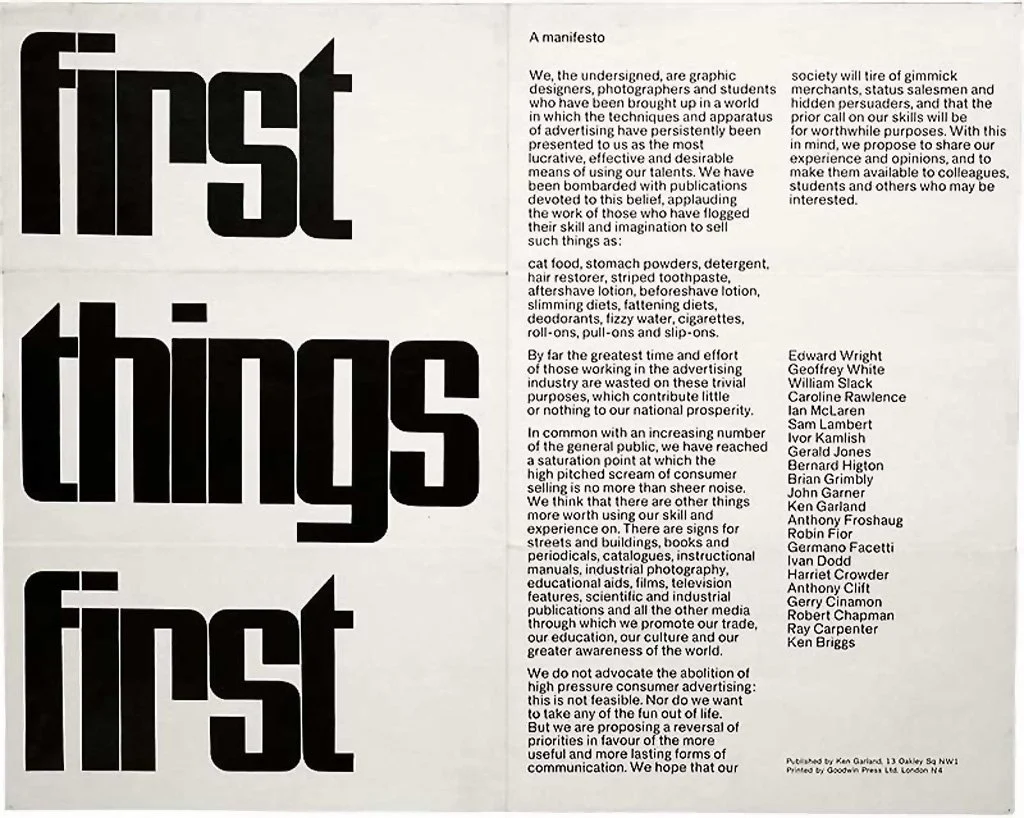
In 1964, Ken Garland wrote First Things First, a manifesto calling on designers to use their talents for the public good. Not for toothpaste, fizzy drinks or fast fashion but for education, justice, and of course, the planet. That call is still echoing today, louder than ever. And for those of us working at the intersection of design and climate communication, it feels like a mission our generation of designers were born into.
This blog post is a reignition of Garland’s message and a reminder that the marriage of design and comms can be one of the most powerful tools we can use in the fight for the planet.
Creativity Drives Capitalism
The manifesto was published independently in 1964, as a response to the growing concerns about the role of designers in society, particularly in the context of the design industry in the 1960s. In this period the design industry developed significant shifts in consumer culture through branding and influential campaigns, which effectively led to the advertising boom.
As the advertising industry flourished, design became inseparable from economic success. It wasn’t just about aesthetics anymore, it was measurable, trackable and optimised. Designers had built something powerful, yet many felt trapped within it.
From the 1960s to the 2000s, the same frustration echoed: creativity was being absorbed into capitalism. Even ethical design often relied on the same systems of selling and persuasion. Meanwhile, sectors like education and charity struggled with underfunding, making it difficult for designers to sustain meaningful work outside commercial frameworks.
New Millennium, Same Money Maker
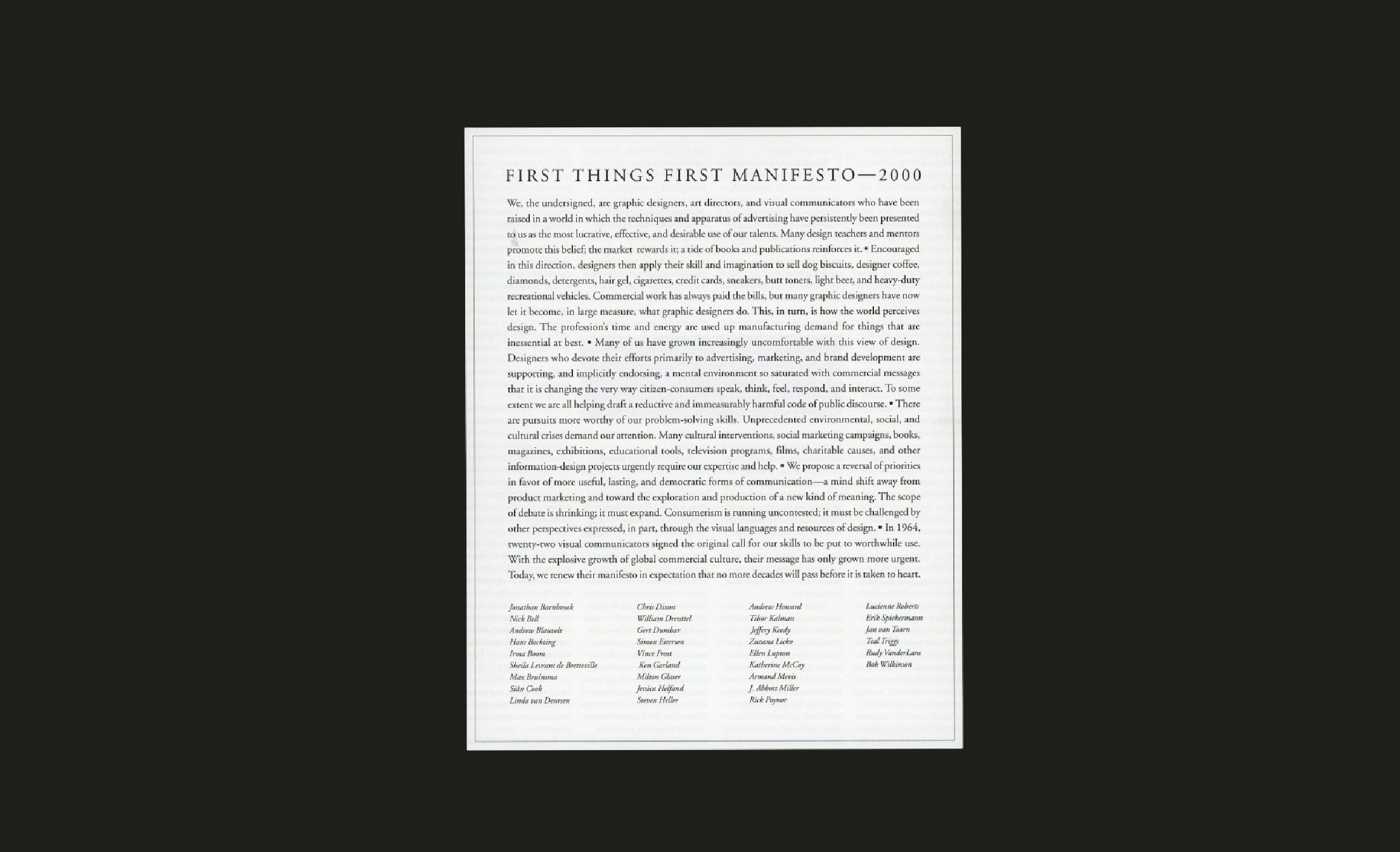
A second version of the ‘First Things First’ (2000) manifesto was published in 2000 by some of the new leading designers in the community. This version was more of a torch shining a light back on this manifesto and highlights that attitudes have stayed the same as the piece shares similar themes, frustrations, and calls to action for the industry.
“There are pursuits more worthy of our problem-solving skills. Unprecedented environmental, social and cultural crises demand our attention.”
New opportunity came with the arrival of technology. Yes, it has provided a whole new platform for the advertising industry to grow but more importantly, the increased connectivity and globalization which in turn led to a more diverse and cross-cultural design landscape for the industries.
Designers were now able to draw inspiration from a variety of global influences, resulting in a fusion of styles and a greater emphasis on inclusivity in the industry and a new wave of collaboration was happening. More positive changes were arising for creatives as agencies were growing and innovative ideas were recognized and celebrated.
Allowing for niche groups to meet and use their skills, designers were now combining skills to create more impact with the creation of smaller agencies, design teams and freelancers. Revolting against the old constraints of the industry, designers are showing they are more than the manufacturers for marketing teams, but the solutions to important cultural and climate change.
First Things Last
In both Manifestos, it was signed by a collective of designers. In 1964 there were 22 signatories, and in the second edition, there were 33 signatories, showing the power of the message as it resonated with so many professionals suffering with the same frustrations and desire for more purposeful work to preserve the planet.
We are already changing the landscape of the creative industry and starting to identify that, we as creatives get to choose the work we do, and agencies are becoming more conscious of company decisions. From the journey through the decades of the design industry it showcases the evolving value of designers in society.
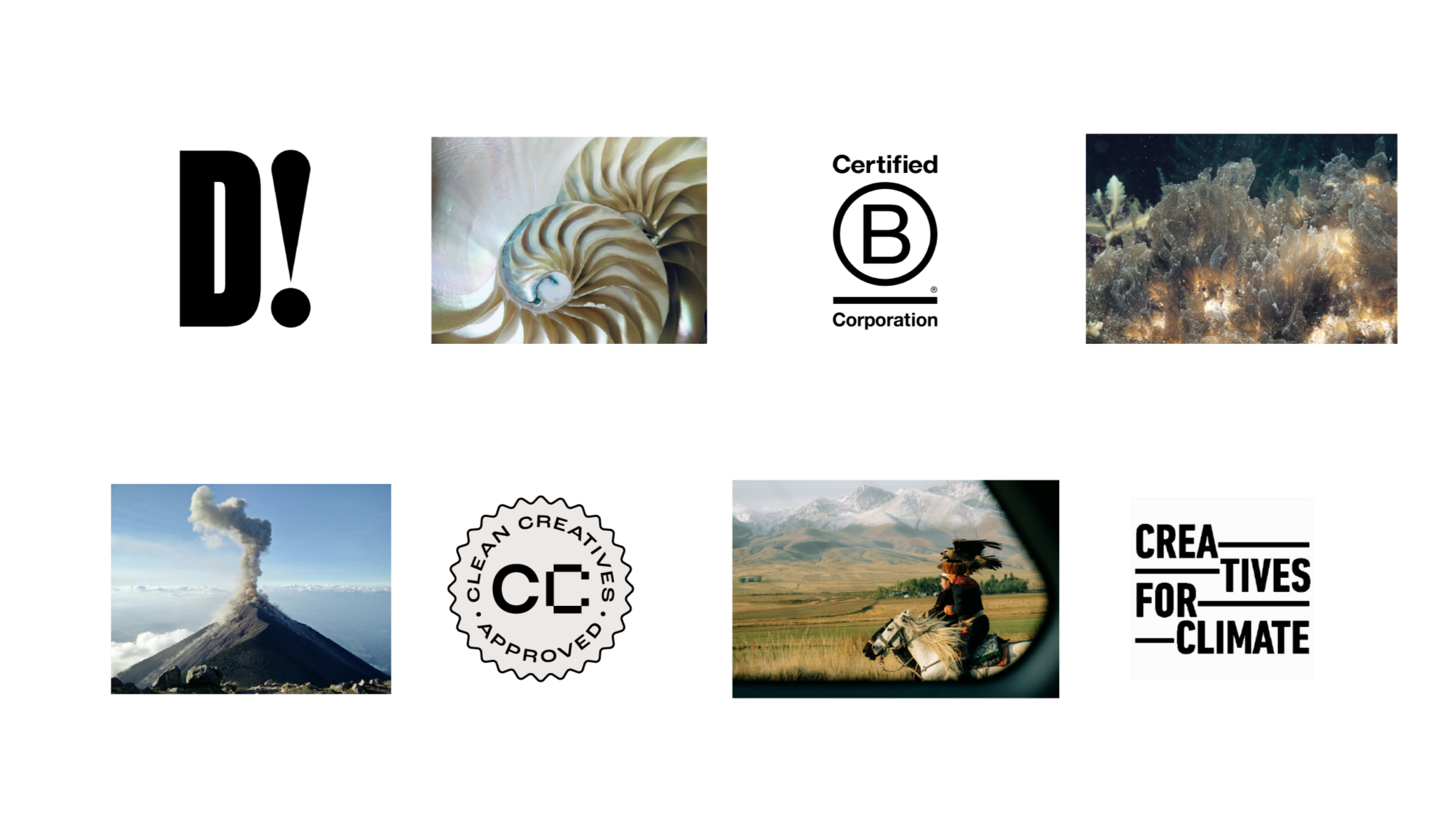
There has been a noticeable rise of creative communities gathering for this purpose, seeing a significant shift toward designing for good: Design Declares, Clean Creatives & Creatives for Climate. This no longer feels like a movement but more a genuine desire to change the industry for the better.
Designers now have the freedom to decide what they create, who they work with, and what they stand for and maybe that’s what Ken Garland was really advocating all along.